Mentoring Men home
Refer someone →Apply nowDonate

VETERANS, CONNECTION & RESEARCH

Life after service.
Connection for
what comes next.

Develop specialist one-to-one mentoring for men serving in defence or moving into civilian life, and learn how mentors with and without defence backgrounds shape connection, trust and outcomes.

Contact us ↗

Proposed specialist programme · RSL LifeCare collaboration subject to agreement

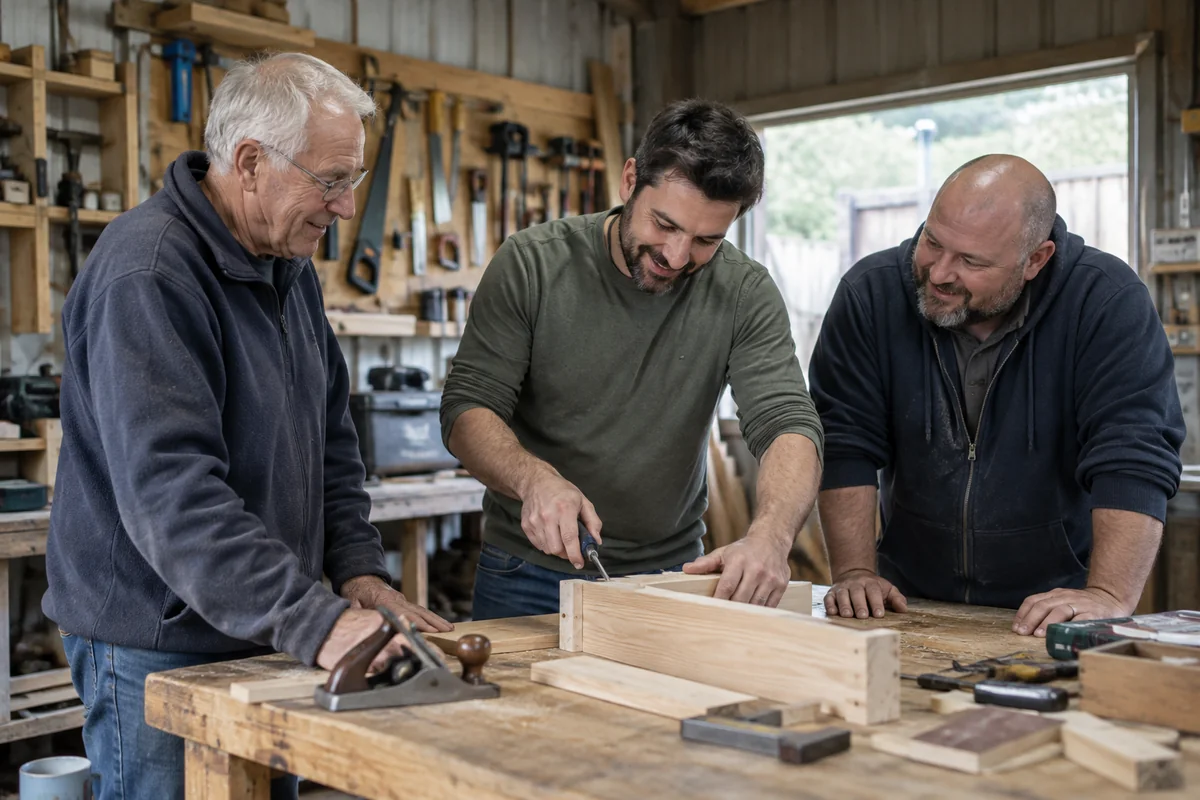
Illustrative image: Men working on a woodworking project together.
Illustrative image · not veteran participants

PROPOSED COLLABORATION · SUBJECT TO AGREEMENT

RSL LifeCare

SUPPORT THROUGH TRANSITION

A person to talk to.
Space to find
what comes next.

Service and the move into civilian life can change a man’s routines, relationships and sense of direction. This proposal would give men serving in defence or moving into civilian life a regular, one-to-one connection with a qualified MM volunteer mentor.

Veteran referrals already reach MM. This proposal would add a targeted pathway and additional mentor preparation. Conversations would centre on everyday life, practical challenges and what comes next, alongside existing defence, veteran and specialist services.

The wider aim includes stronger connection for families. The direct mentoring offer is for men in service or transition. Any family participation in research would need to be designed and consented separately.

THE RESEARCH QUESTION

Does shared defence
experience change
the connection?

Shared defence experience might build trust for some men in service or transition. A civilian mentor might work better for others. We want to understand those preferences and learn which kind of match fits whom.

The proposed research would compare men supported by mentors with a defence background and men supported by civilian mentors.

Alongside outcomes, the research would listen to participants’ lived experience: what helps them feel understood, what makes support acceptable, and how the match affects trust, engagement and their willingness to seek further support.

The question is which approach fits which person, and under what conditions. Neither mentor background would be assumed to be better.

DELIVERY AND RESEARCH TOGETHER

Fund the support.
Understand the experience.

01

Mentoring that fits the person

Identify qualified MM mentors with defence and civilian backgrounds. Seek to co-design additional preparation with RSL LifeCare, subject to agreement. Support intake, participant choice, careful matching, supervision and specialist referrals, with in-person or remote conversations as appropriate.

02

A research partnership

Develop a suitable comparative methodology, including how groups are formed, participant choice, measures, follow-up and ethics. Combine outcome measurement with interviews or structured feedback to understand the lived experience behind the findings.

03

Capacity to put learning to work

Fund MM’s staff coordination, participant support, data preparation and evaluation contribution. Use the findings to improve matching, mentor preparation and support for men in service or transition.

WHAT WE WANT TO LEARN

Beyond attendance.
Into trust, belonging
and everyday life.

The Flourishing Scale could provide a baseline and follow-up, alongside suitable measures of connection and lived experience. A research partner would settle the method and measures for comparing mentor backgrounds.

A research partner would help select measures relevant to connection, loneliness, purpose, help-seeking and the participant’s experience of the match. The design would also consider family-related outcomes and how to understand them appropriately.

Group allocation, sample size and the strength of conclusions would depend on the final methodology. This is a proposed comparison, not a confirmed randomised trial. The study must be able to identify different preferences, no difference between groups, or areas where more evidence is needed.
COMPLEMENTARY PARTNER ROLES

Veteran connections.
Mentoring expertise.

We would seek to co-design additional mentor training with RSL LifeCare, building on previous work together. Its role in this new programme remains subject to agreement.

MM would provide its mentoring model, qualified volunteers, matching, supervision and ongoing participant support. Any additional veteran connections or referral support would be agreed with partners before work begins.

A research partner would shape the comparison. RSL LifeCare’s new role, delivery locations, research design and costs all require agreement before work starts.

A SPECIALIST PROGRAMME TO DEVELOP

Prepare.
Support.
Learn.

The proposed programme would move from readiness and mentor preparation into mentoring, follow-up and reporting. Scope, locations, delivery timing and the evaluation schedule would be agreed with partners before delivery begins.

Before delivery, the partners would confirm suitability, consent, safeguarding, supervision and specialist referral arrangements. Mentors would remain within MM’s non-clinical role; the project would complement clinical and crisis services.

Funding would support the additional mentor preparation, participant coordination and independent learning needed to develop this specialist programme.

LET’S TALK

Back connection
after service.

Talk to us about funding specialist mentoring for men in service or transition, additional mentor preparation and independent learning.

Contact us ↗

Mention Connection after service in your message.

Download prospectus (PDF)